How Long Does It Take to Get Your First Dropshipping Sale? (Realistic Timeline)
Plan the first weeks realistically: store preparation, relevant traffic, offer testing and costs. No deadline or guaranteed first sale.
Key takeaways
- Verify the real product, audience, costs, and fulfillment before committing to a launch.
- Storalo prepares ready stores; sales depend on products, marketing, and your effort.
- Use the practical checks below instead of assumed results or guaranteed timelines.
There is no fixed timeline for a first dropshipping sale. Some stores receive an order soon after launching; others take longer, and some never produce a viable business. A delivery date for a ready store is not a deadline for a customer to buy.
Storalo helps you skip storefront setup with a ready-to-sell Shopify store. That removes one preparation task, but sales still depend on product choice, marketing, pricing, fulfillment, and your effort. Treat the timeline below as a planning example, not a prediction or a promise that the fourth week will produce an order.
First sale and profitability are different milestones
A first sale tells you that someone completed a purchase. It does not tell you whether the order covered product cost, shipping, transaction fees, advertising, returns, or your store's ongoing expenses. A heavily discounted order can feel encouraging while losing money.
Calculate the contribution from that order using actual costs. Then consider whether the result is repeatable. A purchase from a friend, an unusually strong social post, or a one-time promotion may not represent the acquisition process you will use regularly.
Profitability requires more than one completed checkout. You need a repeatable offer, acceptable fulfillment, sufficient margin, and a way to acquire customers without spending beyond what the business can support. Those decisions deserve attention even when the immediate goal is simply to get your first order.
Why no honest provider can give a sales deadline
Your store design provider does not control product demand, advertising delivery, customer budgets, supplier reliability, or every competing offer. A page can be clear and functional without creating a reason to buy a product people do not want.
Traffic also varies in quality. Visitors attracted by entertainment may have different intent from people searching for a solution. Sending more irrelevant visitors can increase the session count without moving you closer to a sale.
Even a promising test needs time to produce interpretable evidence. A few visits cannot settle a product decision. Set your own affordable limits for spend and effort, then review the actual behavior you observe. Do not borrow another seller's timeline as a forecast for your business.
A realistic week-by-week planning path
This is an illustrative work schedule. Supplier samples, missing information, platform checks, and your availability can shift it. If a task is unfinished, move the schedule rather than rush a store into accepting orders it cannot fulfill.
| Period | Main work | Useful output | What it does not promise |
|---|---|---|---|
| Week 1 | Select an audience, check a supplier, brief and review your ready store | A coherent offer and a tested purchase journey | Confirmed demand or an immediate sale |
| Week 2 | Prepare original content and start a controlled traffic test | Relevant visits and an initial record of shopper behavior | Profitable advertising or viral reach |
| Week 3 | Review traffic, product questions, carts, and checkout friction | A prioritized list of adjustments | That a single adjustment will produce orders |
| Week 4 | Retest the improved offer and review costs and fulfillment | A decision to continue, change direction, or pause | A guaranteed first sale by the end of the month |
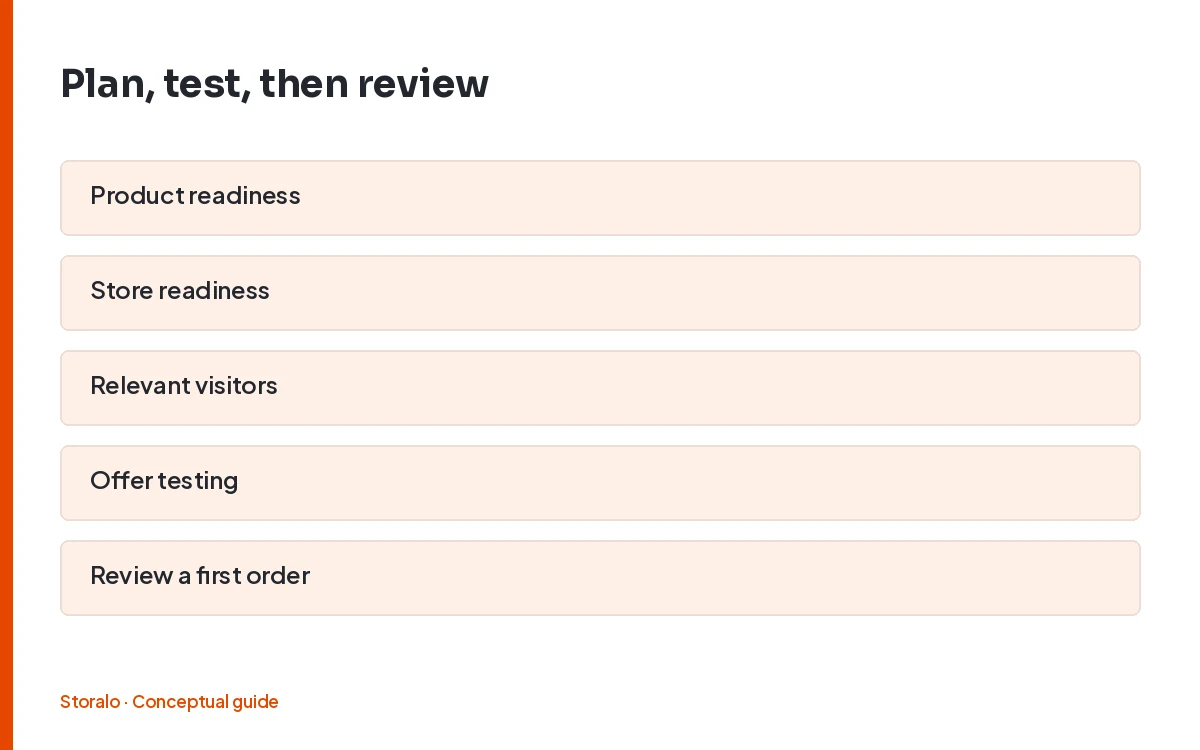
Week 1: product and store readiness
Choose a specific customer and problem. Confirm that a supplier can deliver the product to your target market and that the product can be sold with accurate, supportable claims. Order a sample where practical before making quality promises.
Work out basic costs before briefing the store. Include product cost, shipping, payment fees, acquisition, and a reserve for problems. A product that looks inexpensive at the supplier checkout may have different economics once it reaches the customer.
Give Storalo your niche, market, product links, brand direction, and verified delivery details. Review the delivered storefront on a phone and follow the payment provider's test-order procedure. Store preparation is complete only when the buying path and your operational information make sense together.
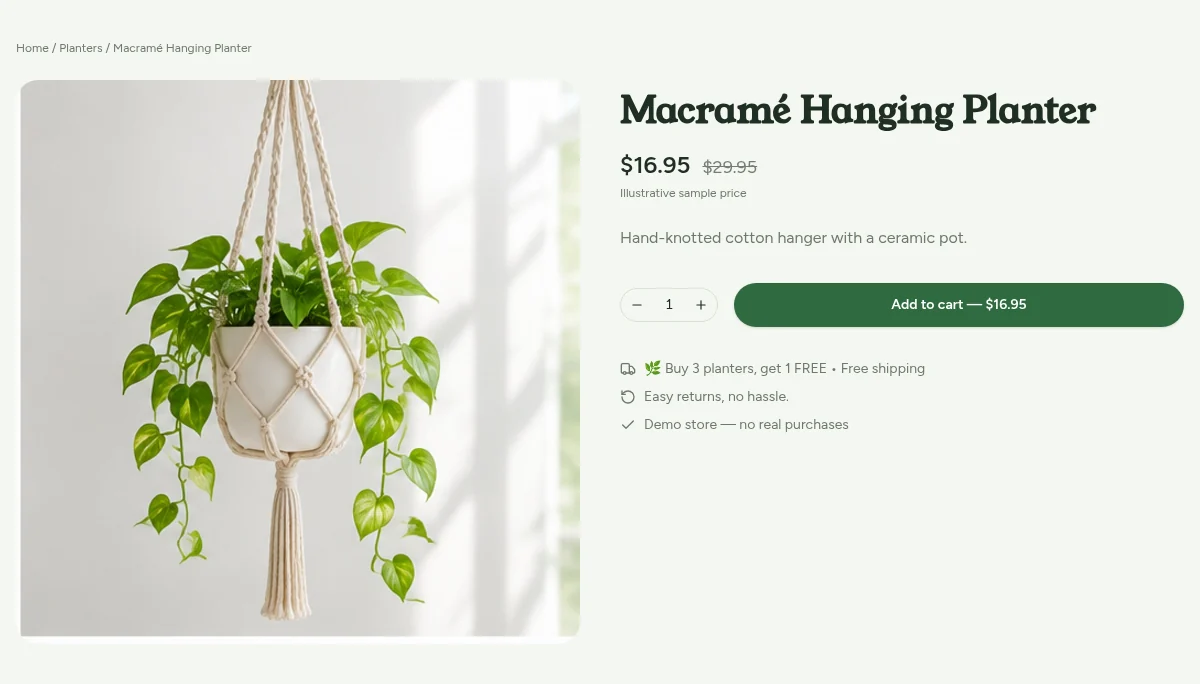
Week 2: content and relevant visitors
Prepare original product demonstrations, photos, and answers to common questions. The goal is to show a real item solving a recognizable problem, not to reproduce someone else's successful video or make claims your sample cannot support.
Choose a channel suited to the audience. Organic content costs time even when there is no advertising bill. Paid traffic needs an affordable test budget and a stopping rule. Neither path is guaranteed to be cheaper or faster for your particular product.
Keep the message consistent between content and landing page. If a video emphasizes a specific use, that use should be explained on the product page. If it promotes a bundle, visitors should see the correct bundle and total rather than have to search through unrelated items.
Weeks 3–4: test and adjust deliberately
Review sessions, additions to cart, checkout visits, and completed purchases in Shopify analytics. Use the official behavior reports guide to understand the available measures. The numbers describe activity; they do not automatically explain why people stop.
Record customer questions and check whether the page answers them. If shoppers ask about dimensions, included accessories, delivery, or returns, those are useful clues. A missing answer is often easier to investigate than a vague concern about the store looking unprofessional.
Change one important variable where practical. Correct a shipping explanation, improve the main photo, or repair a broken purchase control. Note when the change happened and keep the next comparison reasonably similar. Replacing the product, audience, price, and page together makes it difficult to learn what mattered.
What can help you move faster
A validated product direction can reduce aimless testing, but someone else's sales are not your guarantee. Stronger preparation means checking the customer problem, supplier, actual costs, and your ability to make credible original content.
Clear trust information helps remove avoidable uncertainty. Publish working contact details, realistic shipping expectations, and policies that match your operations. Genuine reviews can help when available; invented reviews and fabricated purchase notifications are not an acceptable shortcut.
A focused offer also matters. If shoppers cannot understand what they receive or why the product is useful, additional traffic may not resolve the issue. Storalo's ready-store approach gives you a more structured launch foundation while you keep attention on the audience and product.
Spend your preparation time on the business, not assembling another site. Browse Storalo demo stores and compare ready-store packages before choosing the scope for your launch.
What commonly slows the first sale
Launching before checking shipping can create problems at checkout or after purchase. Advertising a price that hides substantial delivery costs can also produce hesitation. Review the full amount and the delivery explanation from the customer's perspective.
Unfocused traffic wastes attention. A broad audience or an unrelated viral post might produce visits without intent. Look at location, source, landing page, and device before deciding that the store itself is the only problem.
Constantly changing direction is another obstacle. Switching products whenever a post receives little attention prevents you from developing useful demonstrations or learning what shoppers need. On the other hand, continuing indefinitely with unsafe goods or impossible margins is not persistence; it is an avoidable risk.
For a diagnostic sequence, read 12 checks for traffic without sales. For preparation, work through the dropshipping launch checklist.
When to keep going, change product, or pause
Keep testing when you can identify a relevant audience, the product passes supplier and quality checks, and the next adjustment has a clear purpose. Useful questions and checkout activity can guide that adjustment, but do not count them as future revenue.
Change product when the supplier cannot meet reasonable requirements, the economics do not work, or the offer depends on misleading claims. A different photograph cannot solve those problems. Recheck your assumptions rather than buy more traffic automatically.
Pause when the next test would exceed what you can afford to lose, or when you cannot provide reliable fulfillment and support. Protecting your budget is a legitimate outcome of research. A planning schedule should help you make decisions, not pressure you into spending because a particular week has arrived.
What to do when the first order arrives
Check the payment status, address, product variant, and fulfillment details before processing the order. Follow your provider's risk checks and supplier workflow. Do not let excitement replace careful handling of the actual customer request.
Send accurate updates and keep track of delivery and support issues. The first purchase creates an obligation to the buyer, not just an encouraging dashboard number. Their experience can reveal gaps that were invisible during a test checkout.
Record actual costs and the source of the order. Compare those with the assumptions behind your test. The next goal is a reliable process, not simply a larger order count with unknown economics.
Launch with Storalo, then measure honestly
Storalo offers Starter, Growth, and Premium ready stores so you can begin with a defined storefront scope rather than a prolonged DIY project. Choose the package that fits your catalogue and presentation needs, not the one you assume will guarantee a quicker sale.
Order a Storalo Growth Ready Store when its scope fits your launch, then keep a simple record of products, content, traffic, changes, and actual costs. Storalo prepares the store; your testing and business operations determine what happens after it goes live.
Frequently Asked Questions
How long does it take to get a first dropshipping sale?
There is no fixed timeline. Product demand, traffic quality, offer, costs, and fulfillment all matter, and some stores never become viable. A week-by-week plan organizes work; it does not predict when a buyer will place an order.
Does a first order mean the store is profitable?
No. Deduct actual product, shipping, payment, acquisition, and other relevant costs. One sale may lose money or come from an unusual source. Profitability requires a workable repeatable process, not just a completed checkout.
Can I get a first sale without paid ads?
Organic content can bring relevant visitors, but it requires time and useful original material. There is no guaranteed reach or sale. Choose channels around the audience and measure the buying journey rather than only views or likes.
When should I stop testing a product?
Pause or change direction when costs cannot work, suppliers are unreliable, claims are unsupported, or further testing would exceed your affordable limit. Keep testing only when the next action has a clear purpose and operational risks are acceptable.
Does Storalo guarantee a sale within its delivery time?
No. Storalo delivery times refer to store preparation within the package terms, not customer purchases. Storalo gives you a ready-store foundation; products, marketing, fulfillment, and your effort determine business outcomes.
Sources and references
Prices and platform features were checked on November 23, 2026 and can change. Cost ranges for third-party services are illustrative estimates, not quotes.
About the author: Storalo team
The Storalo team writes practical guides for beginners launching ready-to-sell Shopify stores. Storalo is an independent store design service, not affiliated with Shopify Inc. Product choice, marketing, and ongoing store operations remain the owner's responsibility.